Christmas Gift Trends Analysis
Every December, we’re all stuck in the same boat, scrolling through endless “gift guide” articles, wondering what to gift to your love ones. But here’s the thing: this year, someone finally did the homework for us.
Here we have a comprehensive analysis of Christmas gift trends across three major regions, the United States, Europe, and Australia. It is an actual consumer survey data and retail numbers from December 2024, all wrapped up in visualizations and details.
You can access our analysed notebook here, this is the link.
When Gift-Giving Becomes a Data Story
Choosing the right gift is part art, part science, and mostly stress. But what if you could peek behind the curtain and see what people are actually buying versus what they’re just pinning to Pinterest boards?
That’s exactly what the Christmas Gift Trends analysis delivers. By examining 30 different gift categories across 10 countries, it reveals the fascinating patterns in how different regions approach holiday shopping. Think of it as your insider’s guide to not being that person who brings wine to a party where everyone’s gone sober.
It’s More Than Geography
Here’s where things get interesting. While you might assume gift preferences are pretty universal, everyone loves cash, right? The data tells a different story.
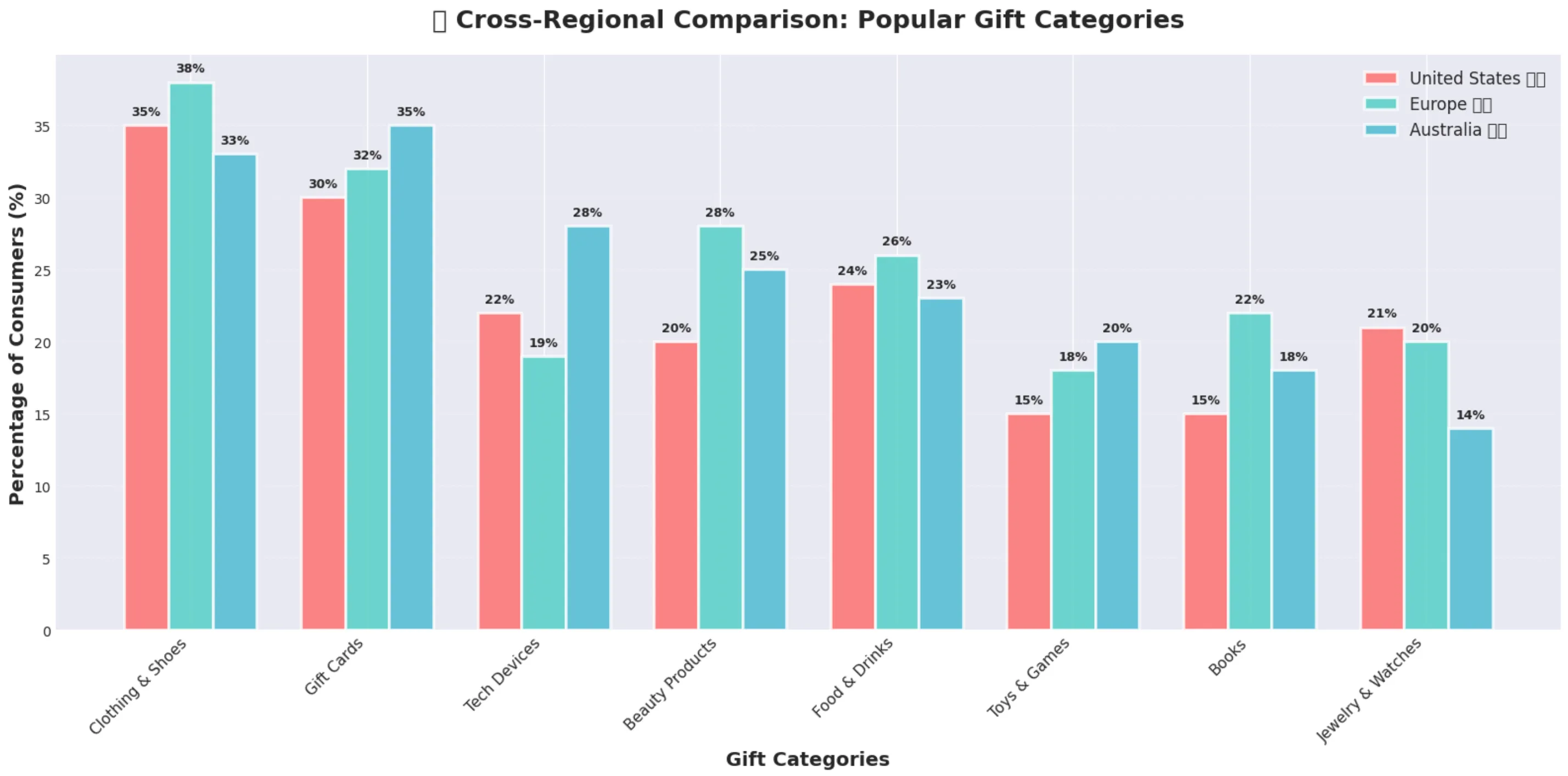
United States:
Americans lean heavily into tech and experiences. Electronics like smartphones and headphones topped charts at nearly 19% of preferred gifts, but here’s the twist, clothing and accessories still dominated at almost 28% of gift selections. So much for the death of traditional presents.
Europe:
The European market showed more diversity in preferences, with sustainable and practical gifts gaining serious traction, example like eco-friendly cookware, it’s trending across the pond. Europeans are apparently putting their money where their climate concerns are.
Australia:
Down under, the story shifts again. With Christmas landing in summer, Australians gravitate toward outdoor gear, experience-based gifts, and interestingly, beauty products that cater to their harsh sun conditions.
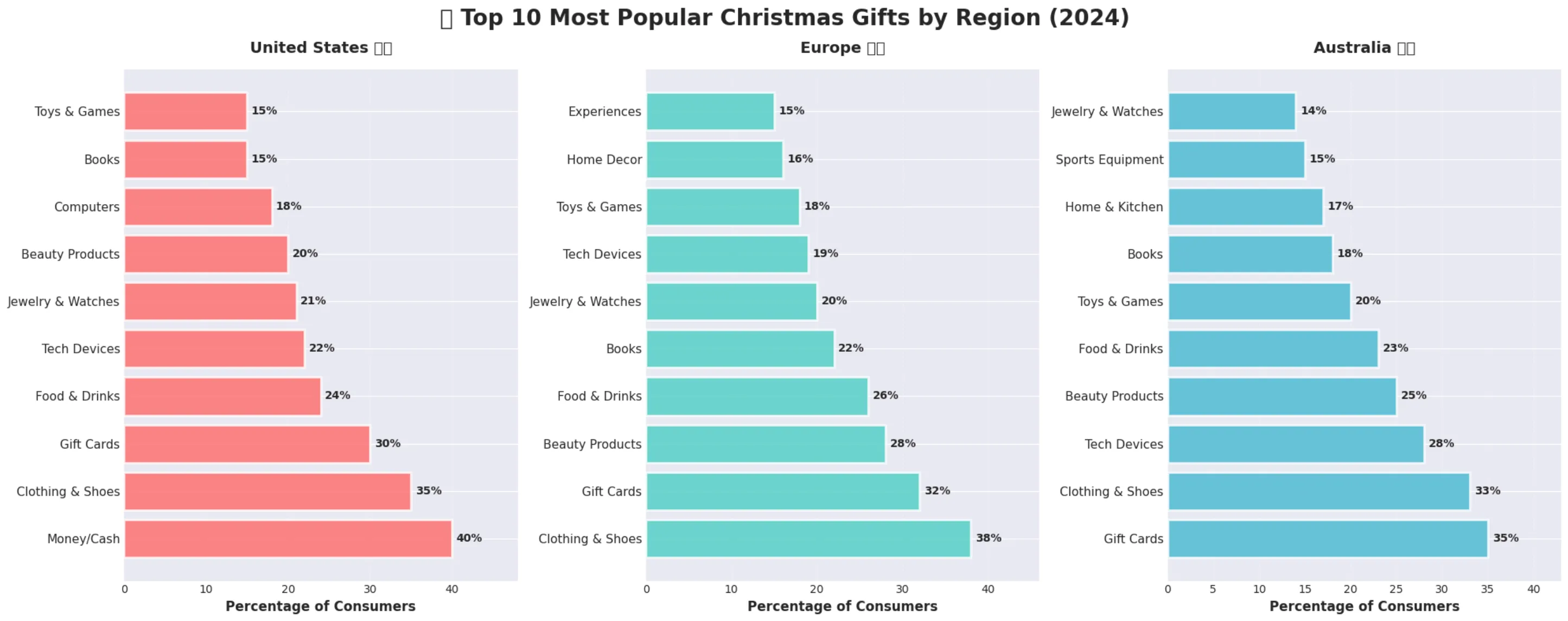
Different Preferences Acorss Regions
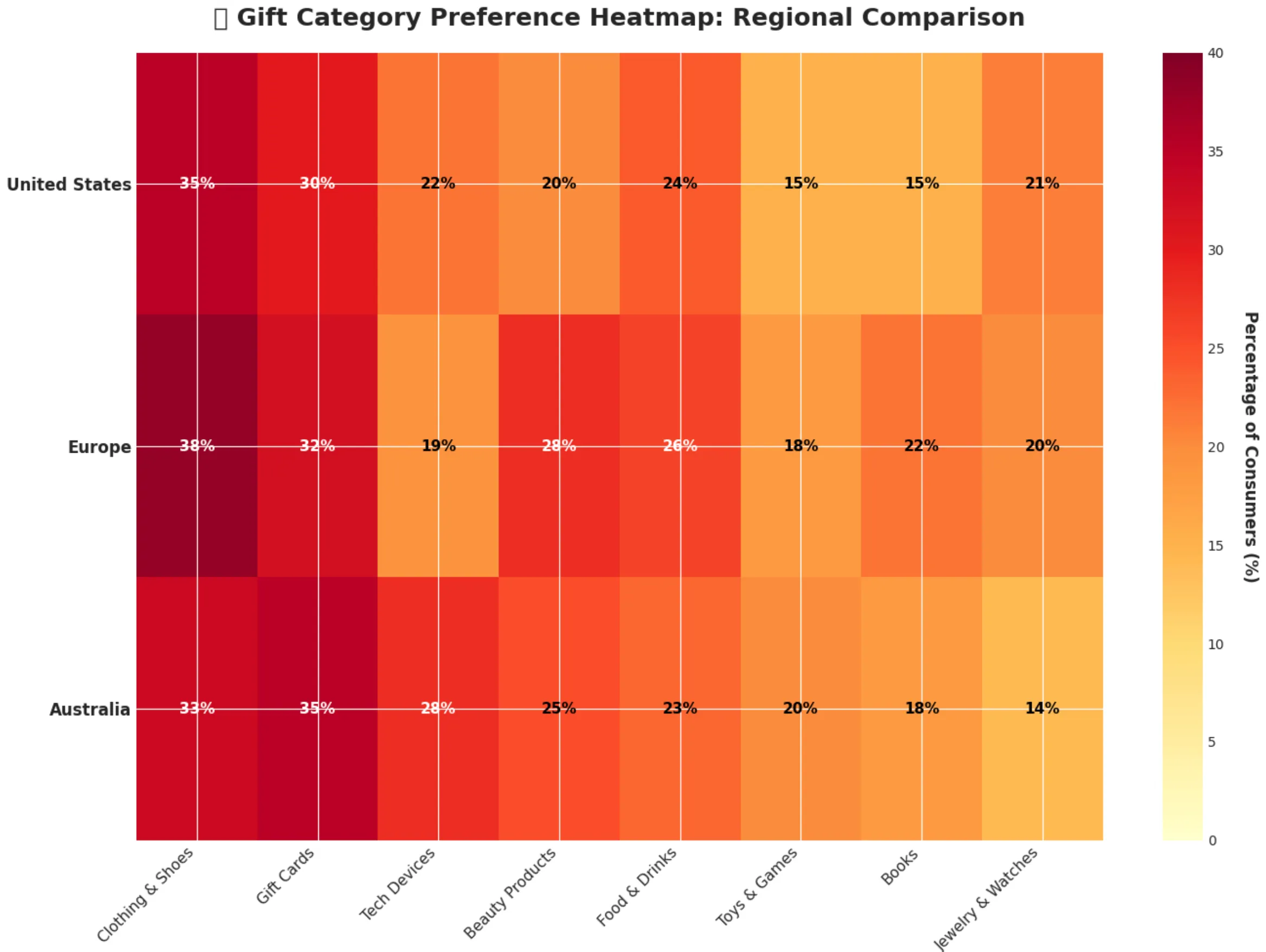
Despite regional differences, some gifts transcend borders. Clothing and accessories remain the safe bet across all three regions, turns out, everyone needs to wear something.
Gift cards and cash equivalents are the winner.
Toys maintained their stronghold at about 20% of purchases, which makes sense when you remember that kids don’t care about your sophisticated gift philosophy, they just want the thing they saw on YouTube.
The Dark Horse Categories
Electronics might seem like an obvious choice, but here’s what caught my eye: the rise of “wellness and fitness” gifts. Portable infrared saunas, premium water bottles that cost more than my first car, and workout equipment that promises to transform your spare bedroom into a boutique gym, these categories saw significant growth.
And can we talk about the beauty and personal care segment?
Sol de Janeiro fragrances became so ubiquitous in Christmas hauls that they’re basically the new “everyone gets a candle.” Their Brazilian Crush scents dominated gift exchanges, particularly among Gen Z recipients who apparently coordinated their wishes via TikTok.
What the Spending Data Reveals
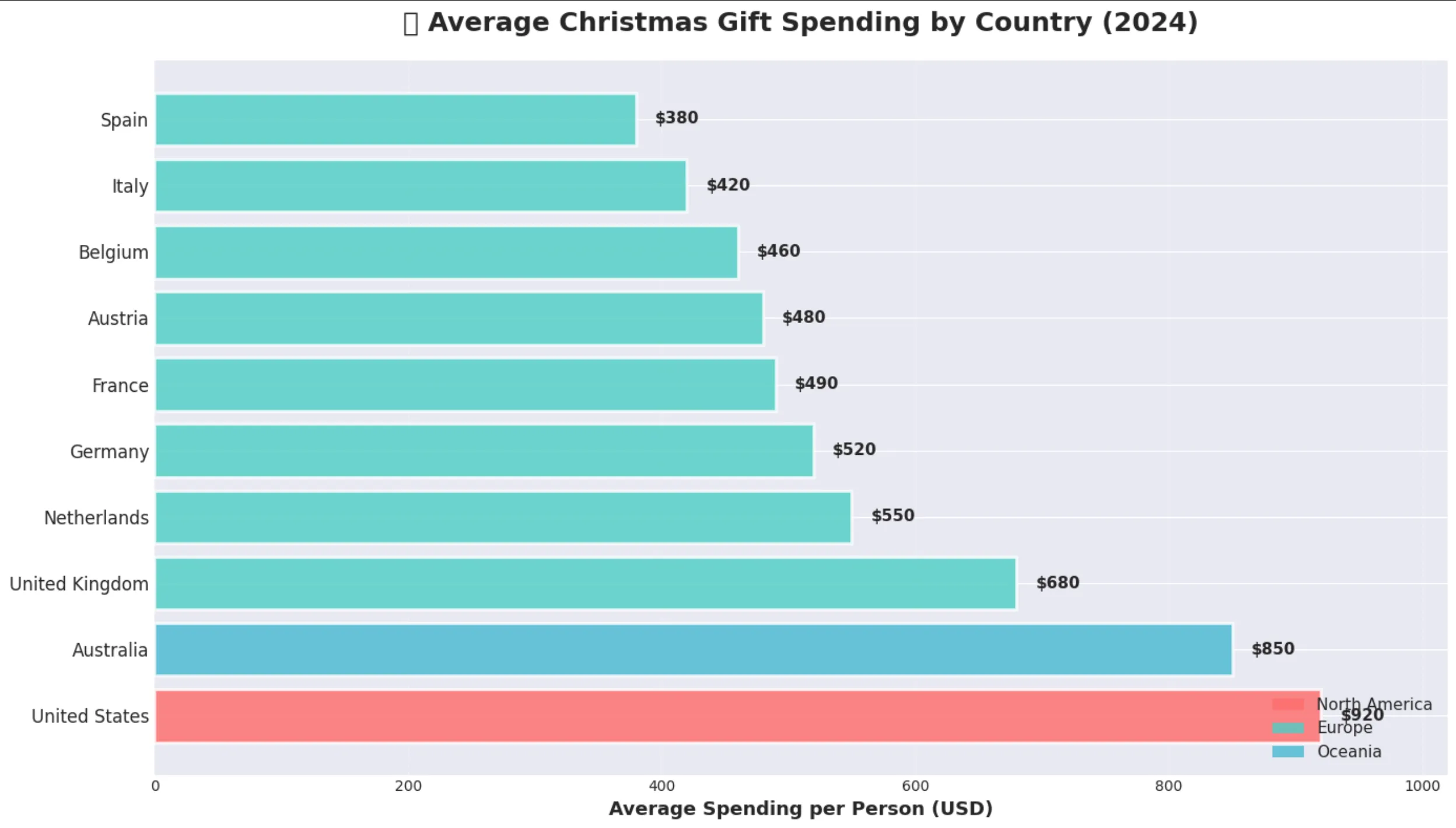
Money talks, and the data listened. Average spending varied wildly not just by region, but by relationship. Most shoppers allocated $50-$100 per gift, though significant others and immediate family members saw budgets stretch considerably higher.
But here’s an interesting wrinkle: younger shoppers (Gen Z and younger Millennials) actually showed higher average spending on fewer gifts. Quality over quantity isn’t just a minimalist mantra anymore, it’s how the kids are doing Christmas.
The “super spenders”, those who dropped over $1,000 on holiday gifts, represented a smaller slice of the pie than you’d expect from watching social media hauls. Turns out, most people are keeping it reasonable despite what influencer unboxing videos might suggest.
The Practical Meets the Aspirational
One pattern emerged consistently across all regions: people want gifts that occupy the space between practical and special. Smart kitchen appliances hit that sweet spot, useful enough to justify the cost, fancy enough to feel like a treat.
The data showed strong performance for “everyday luxury” items. Think: that Dyson Airwrap that’s technically a hair tool but feels like a personal spa treatment. Or those Salomon XT-6 sneakers that conquered the “dad shoe” aesthetic while still being functional enough for actual hiking.
Personalization also played a huge role. Engraved jewelry, custom-fit tech accessories, and monogrammed items saw increased demand, even among lower-budget shoppers. People are apparently willing to pay a premium for gifts that feel uniquely theirs, even if that uniqueness comes from adding someone’s initials to mass-produced goods.
The Tech That’s Actually Moving
Let’s get specific about electronics, because “tech gifts” covers everything from USB cables to full gaming rigs. According to the trends analysis, these were the standouts:
Audio equipment: Premium headphones and portable speakers dominated, with brands focusing on both sound quality and aesthetic design. Because apparently, your headphones need to look good even when you’re just commuting.
Smart home devices: Not the big flashy stuff, but the smaller accessories that fill gaps in existing systems. Think smart plugs, LED strip lights, and voice-controlled picture frames (which, honestly, still feel like something from a sci-fi movie).
Wearables: Fitness trackers and smartwatches maintained steady sales, though the market seems saturated. Most purchases were upgrades rather than first-time buyers, suggesting we’ve hit peak wearable penetration.
What didn’t perform as well? Cutting-edge VR headsets and high-end cameras. Turns out, most people aren’t ready to gift, or receive, a $500+ piece of technology they might not even use.
How Regional Culture Shapes Shopping
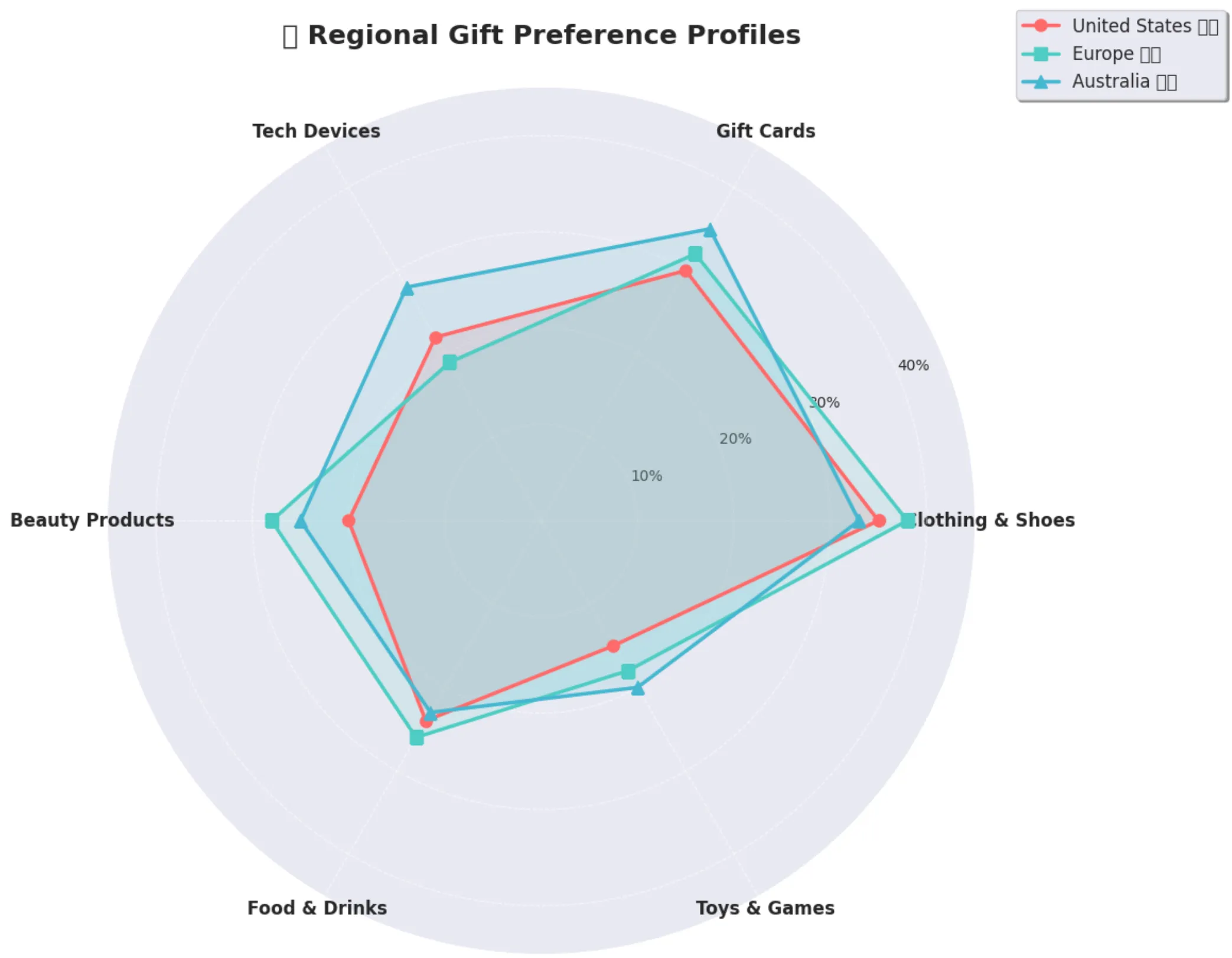
The cultural nuances revealed in the data are genuinely fascinating. European shoppers showed significantly higher concern for sustainability metrics, with eco-friendly packaging and ethical sourcing influencing 40% of purchase decisions. Compare that to the US market, where convenience factors like fast shipping and easy returns topped the priority list.
Australian shoppers demonstrated unique patterns around timing, many started their Christmas shopping earlier to account for international shipping delays and the complexities of summer holiday schedules. They also showed higher preference for experience-based gifts like concert tickets and adventure activities, possibly because giving someone a sweater when it’s 35°C outside feels slightly ridiculous.
The Shift in Shopping Behaviors
Beyond what people bought, the how tells its own story. Online shopping continued its dominance, but with some interesting twists:
Mobile shopping surged:
Over 60% of gift purchases involved a mobile device at some point in the buying journey, even if the final purchase happened elsewhere.
Video influence:
TikTok and Instagram Reels directly impacted purchase decisions for nearly a third of younger shoppers. Those Christmas haul videos? They’re basically market research disguised as entertainment.
Last-minute shopping normalized:
The stigma of waiting until December 20th has apparently evaporated, with retailers extending “last-minute gift” promotions well into the final week.
Created with Livedocs:
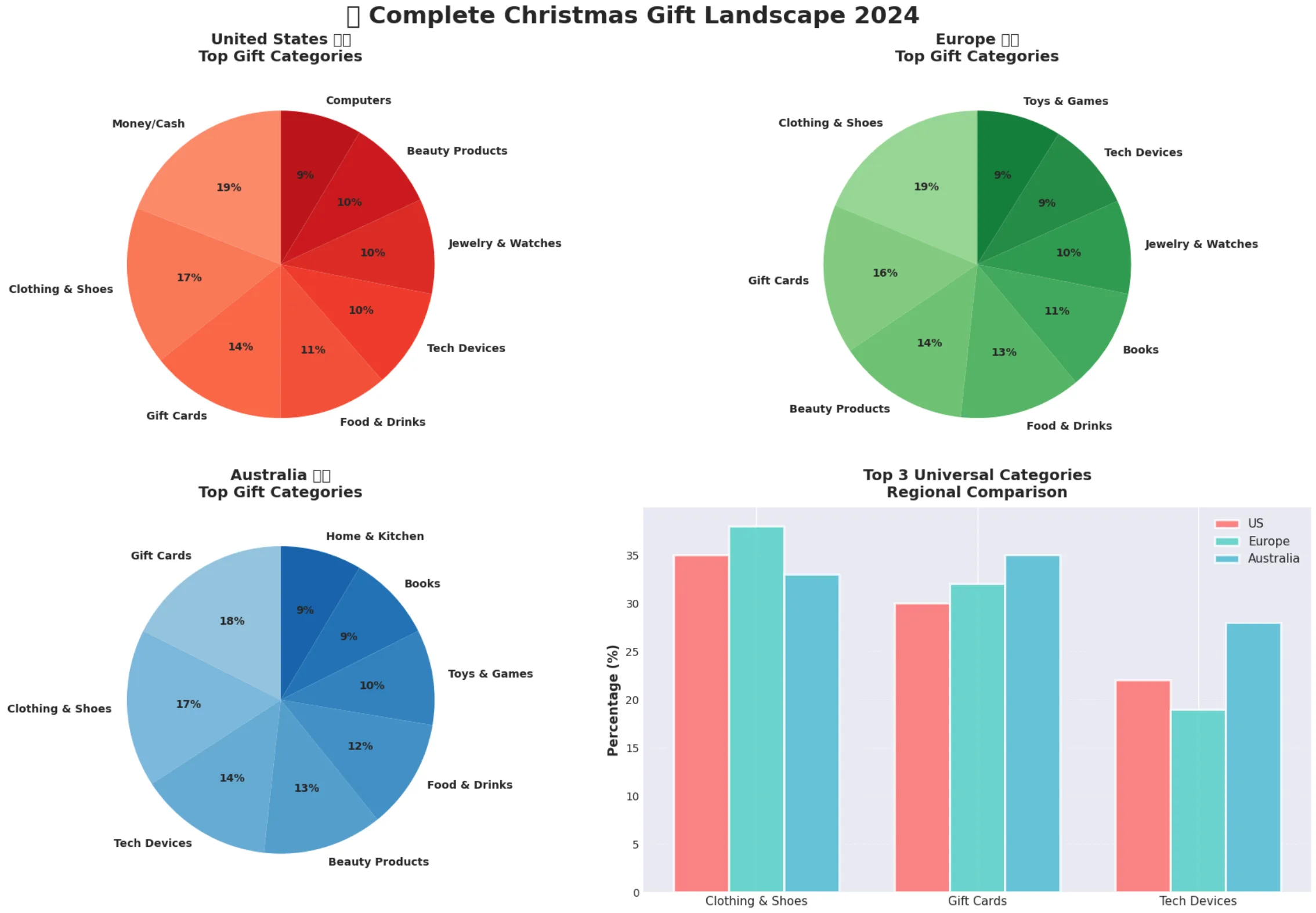
Now, here’s the part that makes this whole analysis possible in the first place. The Christmas Gift Trends 2024 notebook wasn’t just thrown together in Excel, it was built using Livedocs, a platform that’s basically what would happen if Jupyter notebooks and intuitive design had a baby that actually understood what normal people need.
Importing consumer survey data from multiple sources, processing retail numbers across different currencies and formats, generating multiple visualization types (pie charts, bar graphs, heatmaps, radar charts), and weaving it all together with narrative text that explains what it means. Traditionally, that’s a nightmare involving multiple tools, file exports, version control chaos, and probably several nervous breakdowns.
Livedocs flips that script entirely. It’s a collaborative workspace that combines the power of Python and SQL with an interface that doesn’t require a computer science degree to navigate. You can connect directly to databases, run queries, generate visualizations, and add explanatory text, all in one place, all in real-time, all without the usual technical friction.
Final Thoughts
As we close out 2024 and look toward future holiday seasons, a few trends seem likely to strengthen:
AI-personalized recommendations will probably get better and potentially less creepy. Retailers are investing heavily in recommendation engines that balance relevance with privacy.
Experience-based gifting appears to be on an upward trajectory, particularly as younger generations prioritize memories over possessions.
Sustainability won’t just be a nice-to-have, it’s becoming table stakes, especially in European markets where regulations are pushing retailers toward more transparent supply chains.
The rise of platforms like Livedocs also suggests we’ll see more data-driven approaches to understanding consumer behavior. When creating comprehensive analyses becomes easier, we get better insights, which leads to better products, which (hopefully) results in fewer terrible gift exchanges.
The best, fastest agentic notebook 2026? Livedocs.
- 8x speed response
- Ask agent to find datasets for you
- Set system rules for agent
- Collaborate
- And more
Get started with Livedocs and build your first live notebook in minutes.
- 💬 If you have questions or feedback, please email directly at a[at]livedocs[dot]com
- 📣 Take Livedocs for a spin over at livedocs.com/start. Livedocs has a great free plan, with $10 per month of LLM usage on every plan
- 🤝 Say hello to the team on X and LinkedIn
Stay tuned for the next tutorial!
Ready to analyze your data?
Upload your CSV, spreadsheet, or connect to a database. Get charts, metrics, and clear explanations in minutes.
No signup required — start analyzing instantly